Understanding Hydraulic Fittings and Their Critical Role
Hydraulic systems power everything from construction machinery and agricultural equipment to aircraft and industrial manufacturing lines. At the heart of these systems are hydraulic fittings—small but essential components that connect hoses, pipes, and tubes to allow hydraulic fluid to flow safely under extreme pressure.
When people ask, what’s the best material for hydraulic fittings?, they are really asking how to ensure safety, reliability, and efficiency in demanding environments. A fitting failure can cause fluid leaks, pressure loss, equipment damage, or even serious injury. That’s why material selection is not optional—it’s foundational.
Hydraulic fittings must endure:
- Extremely high internal pressure
- Constant vibration and mechanical stress
- Wide temperature fluctuations
- Exposure to moisture, chemicals, and contaminants
The right material ensures leak-free connections, long service life, and reduced maintenance costs. The wrong one leads to frequent replacements, downtime, and safety risks.
What Are Hydraulic Fittings and How Do They Work?
Hydraulic fittings are precision-engineered connectors designed to join different hydraulic components while maintaining a tight seal. Unlike ordinary plumbing connectors, hydraulic fittings must perform reliably under thousands of PSI (pounds per square inch) of pressure.
Primary Functions of Hydraulic Fittings
- Direct hydraulic fluid flow
- Prevent leaks under pressure
- Absorb vibration and movement
- Maintain system integrity
Common Types of Hydraulic Fittings
- Threaded fittings
- Flared fittings
- Compression fittings
- O-ring face seal fittings
Regardless of type, the material of the fitting determines how well it handles stress, corrosion, and wear. This is why understanding materials is essential when deciding what’s the best material for hydraulic fittings?
A fitting may look solid on the outside, but internally it must resist cracking, deformation, and chemical reactions with hydraulic fluids over time.
Why Material Selection Matters in Hydraulic Systems
Material choice is one of the most important decisions in hydraulic system design. Even a perfectly engineered system can fail if the fittings are made from unsuitable materials.
Impact on System Performance
The correct material ensures:
- Consistent pressure retention
- Minimal energy loss
- Smooth fluid flow
- Long-term reliability
Impact on Safety
Inferior materials may:
- Crack under pressure
- Corrode and weaken
- Fail unexpectedly
This can result in high-pressure fluid leaks that are dangerous to operators and costly to repair.
Impact on Cost and Maintenance
Choosing the best material for hydraulic fittings may seem expensive upfront, but it often saves money long term by:
- Reducing downtime
- Lowering replacement frequency
- Minimizing repair labor
In short, the best material balances strength, corrosion resistance, cost, and application requirements—not just price alone.
Key Factors That Determine the Best Material for Hydraulic Fittings
When evaluating what’s the best material for hydraulic fittings?, there is no universal answer. The “best” material depends on how well it matches the operating conditions of your hydraulic system. Engineers and maintenance professionals typically assess several core factors before making a decision.
Core Evaluation Criteria
- Operating pressure range
- Temperature extremes
- Exposure to corrosive elements
- Mechanical stress and vibration
- System lifespan expectations
- Budget constraints
Ignoring even one of these factors can result in premature failure. The ideal material is one that meets all operational demands simultaneously, not just one.
Pressure Rating Requirements and Material Strength
Pressure is the single most critical variable in hydraulic systems. Many systems operate between 1,500 and 6,000 PSI, and some specialized systems exceed that range.
Why Pressure Rating Matters
Hydraulic fittings must:
- Maintain structural integrity under load
- Resist thread deformation
- Prevent micro-cracks that cause leaks
If a fitting material lacks sufficient tensile strength, it may:
- Stretch under pressure
- Lose sealing capability
- Fail catastrophically
Material Performance Under Pressure
- Carbon steel performs exceptionally well in high-pressure systems
- Stainless steel matches or exceeds carbon steel strength
- Brass is limited to low-to-medium pressure
- Aluminum performs adequately only in moderate-pressure systems
For systems where pressure spikes occur suddenly, selecting a high-strength metal becomes even more critical. In such cases, carbon steel or stainless steel is almost always the correct choice.
This pressure-resistance advantage is one of the main reasons steel-based options often top the list when asking what’s the best material for hydraulic fittings?
Temperature Extremes and Environmental Exposure
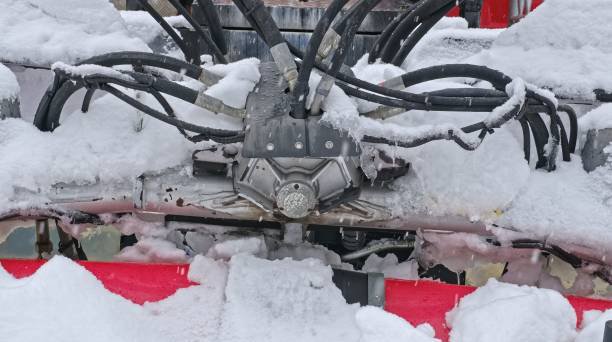
Hydraulic systems rarely operate in controlled environments. Many are exposed to extreme heat, freezing temperatures, moisture, dust, chemicals, and UV radiation.
High-Temperature Environments
At elevated temperatures:
- Metals expand
- Seals harden or degrade
- Lower-grade materials weaken
Stainless steel retains strength at higher temperatures better than most alternatives, making it ideal for:
- Industrial manufacturing
- Chemical processing plants
- Power generation facilities
Low-Temperature Environments
In cold climates:
- Brittle materials may crack
- Thermal contraction can loosen fittings
Carbon steel performs well in cold conditions, but stainless steel offers superior reliability when temperature swings are extreme.
Corrosive and Outdoor Conditions
Moisture, saltwater, and chemicals can destroy fittings through corrosion. In these environments:
- Carbon steel requires protective coatings
- Brass resists corrosion but lacks strength
- Stainless steel offers the best long-term durability
For outdoor or marine applications, corrosion resistance often outweighs cost considerations when determining what’s the best material for hydraulic fittings?
Carbon Steel Hydraulic Fittings: Strength and Affordability Combined
When professionals ask what’s the best material for hydraulic fittings?, carbon steel is often the first answer—and for good reason. Carbon steel hydraulic fittings are the industry standard across construction, manufacturing, mining, and agriculture.
Carbon steel is an alloy primarily made of iron and carbon. The carbon content significantly increases strength and hardness, making it ideal for high-pressure hydraulic systems.
Why Carbon Steel Is So Widely Used
Carbon steel fittings are engineered to handle:
- Extremely high pressure
- Heavy mechanical loads
- Continuous vibration
- Long-duty cycles
They are commonly rated for 3,000 to 6,000 PSI or more, depending on design and standards.
Key Advantages of Carbon Steel Hydraulic Fittings
- Exceptional tensile strength for high-pressure systems
- Cost-effective compared to stainless steel
- Wide availability in global markets
- Compatible with most hydraulic fluids
Carbon steel fittings are often zinc-plated or treated with corrosion-resistant coatings to extend their service life. This makes them suitable for most indoor and moderate outdoor environments.
Limitations of Carbon Steel
Despite its strength, carbon steel has one major drawback: corrosion susceptibility. Without proper coating or maintenance, exposure to moisture, salt, or chemicals can lead to rust.
That said, for standard industrial environments, carbon steel remains the most practical and economical answer to what’s the best material for hydraulic fittings?
Stainless Steel Hydraulic Fittings: Maximum Corrosion Resistance
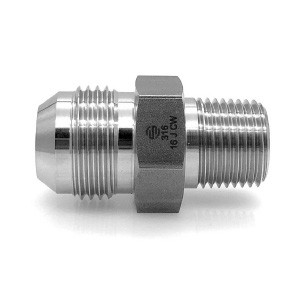
Stainless steel hydraulic fittings are considered the premium option, especially in harsh or corrosive environments. These fittings contain chromium, which forms a passive oxide layer that protects the metal from rust and chemical attack.
Where Stainless Steel Excels
Stainless steel is ideal for environments involving:
- Saltwater exposure
- High humidity
- Chemicals and acids
- Sanitary or hygienic requirements
Industries such as marine, offshore drilling, chemical processing, food production, and pharmaceuticals rely heavily on stainless steel fittings.
Key Advantages of Stainless Steel
- Superior corrosion resistance
- High pressure and temperature tolerance
- Excellent durability and longevity
- Minimal maintenance requirements
In applications where failure is not an option, stainless steel is often considered the safest long-term investment.
Limitations of Stainless Steel
The primary downside is cost. Stainless steel fittings can be significantly more expensive than carbon steel. Installation may also require greater care due to hardness.
Still, when corrosion or hygiene is a concern, stainless steel is often the definitive answer to what’s the best material for hydraulic fittings?
Brass Hydraulic Fittings: Best for Low to Moderate Pressure Systems
Typical Applications for Brass Fittings
- Light hydraulic systems
- Pneumatic systems
- Fuel and lubrication lines
- Indoor or controlled environments
Advantages of Brass Hydraulic Fittings
- Good corrosion resistance, especially in moist environments
- Easy to machine and install
- Resistant to sparking, improving safety
- Moderate cost
Limitations of Brass
Brass does not match the strength of steel-based materials. It is not recommended for high-pressure or high-vibration hydraulic systems.
Because of this limitation, brass is rarely the top contender when answering what’s the best material for hydraulic fittings? in heavy-duty applications—but it performs well in niche, lower-pressure scenarios.
Aluminum Hydraulic Fittings: Lightweight and Versatile
Aluminum hydraulic fittings are often selected when weight reduction is a priority. While they don’t match the raw strength of steel, aluminum fittings offer unique advantages in specific applications.
Aluminum is naturally corrosion-resistant due to its oxide layer, making it suitable for certain outdoor and mobile environments.
Where Aluminum Hydraulic Fittings Are Used
- Mobile hydraulic equipment
- Aerospace systems
- Automotive applications
- Low-to-moderate pressure systems
Advantages of Aluminum Hydraulic Fittings
- Lightweight, reducing overall system weight
- Good corrosion resistance in non-aggressive environments
- Easy handling and installation
- Lower cost than stainless steel
Limitations of Aluminum
Aluminum fittings are:
- Less resistant to high pressure
- More prone to thread damage
- Not ideal for high-vibration systems
Because of these limitations, aluminum is best used when weight savings outweigh the need for maximum strength.
Comparing Hydraulic Fitting Materials Side by Side
To clearly answer what’s the best material for hydraulic fittings?, it helps to compare materials across key performance criteria.
| Material | Pressure Capacity | Corrosion Resistance | Weight | Cost | Best Applications |
|---|---|---|---|---|---|
| Carbon Steel | Very High | Moderate | Heavy | Low | Industrial, construction |
| Stainless Steel | Very High | Excellent | Heavy | High | Marine, chemical, food-grade |
| Brass | Moderate | Good | Medium | Medium | Low-pressure systems |
| Aluminum | Moderate | Good | Light | Medium | Mobile and aerospace |
Key Takeaway
- Choose carbon steel for strength and affordability
- Choose stainless steel for harsh, corrosive environments
- Choose brass for light-duty systems
- Choose aluminum when weight reduction is critical
This comparison highlights why no single material fits every scenario.
Industry-Specific Recommendations for Hydraulic Fittings
Different industries face unique challenges, making material selection highly application-specific.
Construction and Heavy Equipment
Carbon steel is the preferred choice due to:
- High pressure tolerance
- Shock and vibration resistance
- Cost efficiency
Marine and Offshore Applications
Stainless steel is essential because:
- Saltwater causes rapid corrosion
- Maintenance access is limited
- Long service life is critical
Food, Beverage, and Pharmaceutical Industries
Stainless steel dominates due to:
- Sanitary requirements
- Resistance to cleaning chemicals
- Regulatory compliance
In these industries, choosing the wrong material can lead to contamination, corrosion, or regulatory violations.
Installation Considerations That Affect Material Performance
Even after choosing the best material, improper installation can cause premature failure. Many hydraulic system issues are not material defects—but installation errors.
Material-Specific Installation Factors
Different materials behave differently during installation:
- Carbon steel & stainless steel
- Require precise torque values
- Over-tightening can cause thread galling (especially stainless steel)
- Brass
- Softer metal, easy to overtighten and deform
- Aluminum
- Threads damage easily if cross-threaded
Best Practices for Installation
To maximize the lifespan of hydraulic fittings:
- Always follow manufacturer torque specifications
- Use compatible materials (e.g., avoid dissimilar metals that cause galvanic corrosion)
- Apply thread sealants only where recommended
- Ensure proper alignment—never force fittings into position
Correct installation ensures that the chosen material performs as intended and supports the decision behind what’s the best material for hydraulic fittings?
Maintenance, Durability, and Lifecycle Cost Analysis
The true cost of hydraulic fittings is not just the purchase price—it’s the lifecycle cost.
How Material Impacts Maintenance
- Carbon steel
- Lower upfront cost
- Requires monitoring for corrosion
- Stainless steel
- Higher initial cost
- Minimal maintenance over time
- Brass
- Moderate maintenance
- Limited lifespan in demanding systems
- Aluminum
- Lightweight but prone to wear in high-stress systems
Durability and Replacement Frequency
Frequent fitting replacement leads to:
- Increased downtime
- Higher labor costs
- Reduced system reliability
In corrosive or remote environments, stainless steel often proves more economical long-term, despite higher upfront cost. This is why lifecycle analysis is critical when answering what’s the best material for hydraulic fittings?
Conclusion
So, what’s the best material for hydraulic fittings? It depends on your application. Carbon steel is ideal for most high-pressure industrial systems due to its strength and affordability. Stainless steel is the best choice for corrosive, outdoor, or sanitary environments where durability and low maintenance matter most. Brass works well in low-pressure systems, while aluminum is best suited for lightweight, moderate-pressure applications.
By matching the fitting material to pressure, environment, and lifecycle cost, you ensure safer operation, longer service life, and reliable hydraulic system performance.
FAQs
1. What’s the best material for hydraulic fittings in high-pressure systems?
Carbon steel and stainless steel are best suited for high-pressure hydraulic applications due to superior strength.
2. Is stainless steel always better than carbon steel?
No. Stainless steel is better for corrosive environments, but carbon steel is more cost-effective for standard industrial use.
3. Can brass fittings be used in hydraulic systems?
Yes, but only for low to moderate pressure systems where vibration and shock loads are minimal.
4. Are aluminum hydraulic fittings safe for industrial use?
They are safe for lightweight and moderate-pressure applications, but not ideal for heavy-duty or high-vibration systems.
5. How do I prevent corrosion in hydraulic fittings?
Choose corrosion-resistant materials, apply protective coatings, and perform routine inspections.
6. What’s the best material for hydraulic fittings used outdoors?
Stainless steel is typically the best choice for outdoor and harsh environmental conditions.