Introduction
When designing or maintaining a hydraulic system, choosing the right connection type can make or break performance. The debate between reusable fittings vs. crimp fittings has been ongoing for years, especially among maintenance engineers, field technicians, and OEM (Original Equipment Manufacturer) designers. The decision you make can influence not only installation ease but also system reliability, downtime, and operational costs.
Why does it matter so much? Because a single fitting failure can cause catastrophic fluid leaks, pressure drops, and even severe equipment damage. Choosing the right fitting ensures:
- Leak-free operation under variable pressure
- Ease of maintenance and replacement
- Compatibility with different hose materials
- Long-term cost efficiency
Understanding the difference between reusable and crimp fittings requires more than just knowing how they’re attached — it involves understanding their construction, performance behavior under pressure, and long-term durability in harsh environments.
Let’s break down both fitting types to help you make the right engineering decision.
What Are Reusable Fittings?
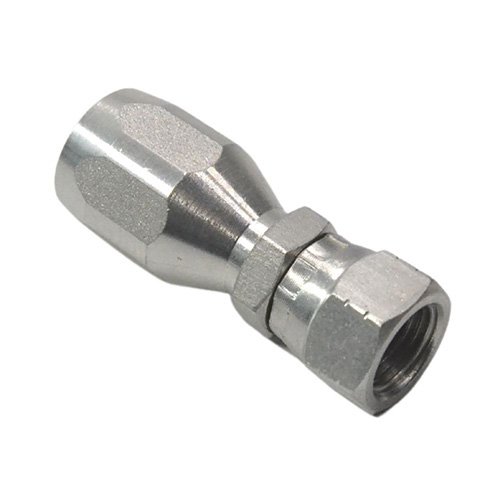
Reusable fittings, often referred to as field-attachable fittings, are designed for ease of installation and repair without the need for specialized equipment. They consist of two key parts:
- The Socket (Collar): Screws onto the hose’s outer cover.
- The Nipple (Insert): Fits inside the hose and forms the fluid-tight seal.
These components are typically made from durable materials such as steel, brass, or stainless steel, depending on the hose type and fluid medium.
How Reusable Fittings Work
The fitting is manually assembled by inserting the nipple into the hose bore while threading the socket over the hose’s outer layer. As the socket tightens, it compresses the hose wall between itself and the nipple, creating a secure mechanical connection.
This simple, yet robust, process makes reusable fittings a favorite among technicians who need to make on-the-spot repairs in the field. Since they require only hand tools (usually two wrenches), they’re ideal for environments where access to hydraulic crimping machines is limited.
Advantages of Reusable Fittings
- Ease of Assembly:
Reusable fittings can be installed anywhere using simple tools, making them perfect for field maintenance or emergency hose replacement. - Reusability:
As the name implies, these fittings can be detached, cleaned, and reused on new hoses multiple times, reducing waste and saving costs. - No Specialized Equipment:
Small operators or service crews don’t need to invest in expensive crimping tools. - Cost-Efficient for Low-Volume Applications:
For small-scale or mobile operations, reusable fittings offer a low-barrier entry for maintaining hydraulic systems. - Flexibility Across Hose Types:
Available for a range of hose constructions — especially textile-braided and thermoplastic hoses — they provide good versatility.
Common Applications for Reusable Fittings
Reusable fittings are commonly found in:
- Agricultural machinery (tractors, sprayers)
- Maintenance trucks and mobile service units
- Light industrial and pneumatic systems
- Hydraulic test equipment and field diagnostics
- Marine applications (where repairs are frequent and accessibility matters)
However, while reusable fittings offer flexibility, they’re not suitable for high-pressure or heavy-duty hydraulic circuits. Their mechanical grip cannot match the strength or uniformity of a properly crimped connection.
What Are Crimp Fittings?
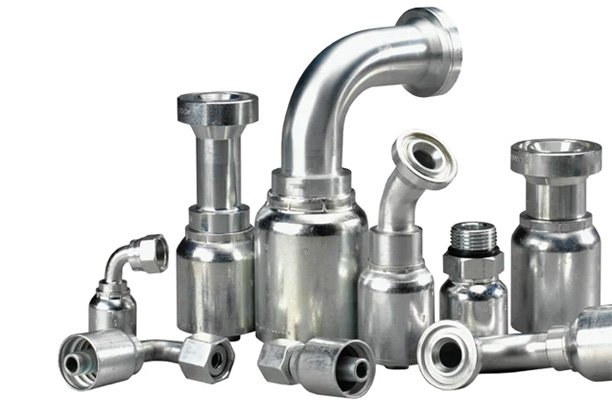
Crimp fittings represent the industrial standard for professional, high-performance hydraulic hose assemblies. Unlike reusable fittings, these fittings are permanently attached to the hose using a hydraulic crimping machine that compresses the fitting’s ferrule (sleeve) uniformly around the hose.
How Crimp Fittings Work
The process involves inserting the hose end into the crimp fitting’s ferrule until it reaches a depth stop. The assembly is then placed in a hydraulic crimping press, where the ferrule is compressed with controlled force according to precise dimensions specified by the fitting manufacturer (e.g., Parker, Gates, Eaton).
This creates a 360° radial compression, forming a leak-free, permanent bond between the hose reinforcement and fitting nipple. Proper crimping ensures:
- Consistent sealing performance
- Resistance to vibration and pulsation
- Compliance with SAE and ISO hydraulic standards
Advantages of Crimp Fittings
- Superior Strength and Reliability:
Crimped fittings provide a more uniform and secure connection capable of withstanding extremely high pressures — often exceeding 6,000 psi in heavy-duty systems. - Safety and Compliance:
Crimped assemblies are tested and certified according to international standards, ensuring consistent performance and operator safety. - Reduced Leak Risk:
Unlike reusable fittings, crimp fittings form a permanent seal that resists loosening over time due to vibration or pressure spikes. - Compact and Lightweight Design:
Crimp fittings take up less space, making them suitable for dense hydraulic routing in confined machinery spaces. - Ideal for OEM and Production Environments:
Their precision and repeatability make them the standard for factory-assembled hoses.
Where Crimp Fittings Are Commonly Used
Crimp fittings dominate high-demand industries such as:
- Construction and mining equipment
- Agriculture and forestry
- Aerospace and automotive systems
- Oil and gas hydraulics
- Heavy machinery manufacturing
Their performance under extreme conditions — pressure, temperature, and vibration — makes them indispensable for critical systems where failure is not an option.
Reusable Fittings vs. Crimp Fittings: Key Differences
When comparing reusable fittings vs. crimp fittings, several key factors determine which is better suited for your application. The choice depends on pressure requirements, maintenance frequency, cost structure, and environmental conditions. Let’s examine the major distinctions in detail.
1. Installation Process
Reusable fittings are designed for manual installation using standard tools such as two open-end wrenches. There’s no need for crimping equipment, making them ideal for quick field repairs.
By contrast, crimp fittings require a hydraulic crimping machine that compresses the ferrule around the hose with precision. This process ensures a uniform crimp diameter, guaranteeing consistent sealing strength and safety.
Summary:
- Reusable: Easy field assembly, no machines required.
- Crimp: Requires specialized crimper, offers higher precision and reliability.
2. Reusability and Maintenance
As the name suggests, reusable fittings can be detached and reinstalled multiple times. This reusability makes them perfect for operations where hoses are frequently replaced or cut to custom lengths on-site.
However, crimp fittings are single-use. Once crimped, they form a permanent bond and cannot be removed without damaging the hose or fitting. For most industrial systems, this permanence is an advantage, ensuring a secure, tamper-proof connection.
3. Pressure Rating and Performance
This is the single most important distinction between the two.
- Reusable fittings are generally rated for low to medium pressure (up to 3,000 psi for some steel models).
- Crimp fittings, on the other hand, can handle ultra-high pressures exceeding 6,000 psi, depending on the hose and fitting combination.
Because of their stronger, uniform compression, crimp fittings provide superior vibration resistance, which is essential for heavy-duty hydraulic circuits.
4. Leak Prevention and Durability
Crimp fittings outperform reusable fittings when it comes to long-term leak prevention. Their 360° crimp profile ensures a tight metal-to-hose grip that resists pressure pulsations, vibration, and temperature cycling.
Reusable fittings, while reliable, may loosen over time in systems with constant vibration or high dynamic loading — particularly if not torqued to the manufacturer’s specifications.
5. Cost and Operational Efficiency
Although reusable fittings save initial costs (no crimping equipment required), crimp fittings provide better long-term efficiency due to:
- Fewer leaks
- Longer service life
- Faster assembly in high-volume production
In short:
| Feature | Reusable Fittings | Crimp Fittings |
|---|---|---|
| Installation | Manual | Hydraulic crimper |
| Reusability | Multiple times | Single-use |
| Pressure Rating | Low to Medium | Medium to High |
| Durability | Moderate | Excellent |
| Leak Prevention | Good | Superior |
| Cost Efficiency | Short-term savings | Long-term savings |
How to Choose Between Reusable and Crimp Fittings
Selecting between reusable fittings vs. crimp fittings isn’t just about convenience — it’s about matching the fitting type to your application’s technical and operational demands.
1. Consider Operating Pressure
- If your system operates at 3,000 psi or below, reusable fittings can suffice.
- For pressures exceeding 3,000 psi, or for high-frequency pulsation systems, crimp fittings are the safer and more durable choice.
2. Evaluate Maintenance Environment
- Field or remote operations: Reusable fittings shine here. Technicians can quickly repair hoses on-site without specialized tools.
- Factory or workshop setups: Crimp fittings are ideal, especially when assembly consistency and certification are important.
3. Assess Frequency of Hose Replacement
If your system involves frequent hose replacements, reusable fittings reduce downtime. However, for systems where hoses remain static for years, crimp fittings ensure a long-term, maintenance-free connection.
4. Analyze Equipment Availability
Reusable fittings are perfect for small teams that don’t have access to hydraulic crimpers.
Larger facilities and OEMs, on the other hand, already use calibrated crimping machines, which make crimp fittings more practical.
5. Evaluate Fluid Type and Temperature
Certain fluids (especially aggressive chemicals or hot oils) can cause hose expansion and contraction. Crimp fittings, with their 360° compression, handle such conditions far better than reusable fittings.
6. Safety and Compliance
If you operate in regulated environments — aerospace, defense, or heavy machinery — you’ll likely be required to use crimp fittings due to compliance with SAE, ISO, or manufacturer specifications.
Pro Tip: Always check your hose manufacturer’s assembly guide. Mixing fitting types or brands can void warranties and cause premature hose failure.
Cost Comparison: Long-Term Value Analysis
Cost plays a big role in deciding between reusable and crimp fittings, especially for businesses balancing upfront investment with long-term performance.
Initial Investment
- Reusable Fittings: No need for expensive crimping tools — perfect for small operators or mobile repair services.
- Crimp Fittings: Require an initial investment in crimping equipment, which can range from $1,000 to $10,000+ depending on capacity.
However, this investment quickly pays off in high-volume applications, as crimp fittings and hoses cost less per assembly compared to reusable setups.
Operational Costs
Reusable fittings can be reused several times, but this can also increase labor time — since manual assembly and disassembly take longer. Crimp fittings, once set up, allow mass production with consistent quality, saving time per hose.
| Cost Factor | Reusable Fittings | Crimp Fittings |
|---|---|---|
| Tooling Cost | None | Moderate to High |
| Assembly Time | Longer (manual) | Faster (machine) |
| Failure Risk | Moderate | Low |
| Replacement Cost | Low (reuse possible) | Higher per fitting |
| Overall Lifetime Cost | Moderate | Lower for large-scale systems |
Downtime Considerations
For industrial operations, downtime is the real cost driver. Crimp fittings typically result in fewer leaks, failures, or reassemblies, reducing unscheduled maintenance and saving thousands in labor and lost production hours.
Conclusion of Cost Analysis
- Small-scale users: Reusable fittings win in flexibility and lower startup cost.
- Large-scale or critical systems: Crimp fittings provide the best long-term ROI (Return on Investment) through durability and reliability.
Common Mistakes When Choosing Hose Fittings
Selecting the right hose fittings may seem straightforward, but it’s one of the most commonly misunderstood aspects of hydraulic and fluid transfer systems. Choosing the wrong fitting type, size, or material can lead to system failure, leaks, and costly downtime. Below are the most frequent mistakes engineers and technicians make — and how to avoid them.
1. Ignoring Pressure Ratings
Every hose assembly is designed for a specific maximum working pressure. Installing reusable fittings on a high-pressure line that exceeds their limit can cause hose blowouts or leaks.
✅ Tip:
Always ensure the fitting’s rated pressure exceeds the system’s operating pressure by at least 25% for safety.
2. Mixing Different Fitting Brands
Each manufacturer (e.g., Parker, Gates, Eaton, Aeroquip) has precise tolerances for their fittings and hoses. Mixing components from different brands — especially between reusable and crimp fittings — can create improper sealing or mismatched crimp diameters.
✅ Tip:
Stick to one manufacturer’s hose and fitting system to ensure proper compatibility and maintain warranty coverage.
3. Using the Wrong Fitting Material
Fittings are made from materials like carbon steel, stainless steel, brass, or aluminum — each suited for specific fluids and environments.
- Steel: Excellent for high-pressure, oil-based systems.
- Brass: Corrosion-resistant, ideal for air or water systems.
- Stainless steel: Best for marine or chemical environments.
Using the wrong material can cause galvanic corrosion or premature failure.
4. Over-Tightening or Under-Tightening Reusable Fittings
Reusable fittings rely on mechanical grip and thread torque. Over-tightening can strip threads or crush hose reinforcements, while under-tightening can lead to leaks or blow-offs.
✅ Tip:
Always follow the manufacturer’s torque specifications and check for leaks after installation.
5. Ignoring Environmental Factors
Heat, UV exposure, and chemical contact can degrade hoses and fittings over time. For example, synthetic rubber hoses may expand under heat, loosening reusable fittings, whereas crimp fittings maintain their hold.
✅ Tip:
Select fittings rated for your system’s temperature range, fluid compatibility, and environmental exposure.
6. Neglecting Routine Inspections
Even the best fitting can fail if not periodically checked. Regular inspection of fittings for corrosion, leaks, or wear ensures early detection and prevents catastrophic failure.
✅ Tip:
Schedule visual inspections every 500 hours of operation or per your equipment manufacturer’s maintenance guide.
Safety Considerations for Hydraulic Systems
Hydraulic systems operate under extreme pressure — sometimes exceeding 6,000 psi (410 bar) — and a failed fitting can cause serious injury or equipment damage. Whether you’re using reusable fittings or crimp fittings, safety is non-negotiable.
1. Use Only Certified Components
Never use non-certified or imitation fittings. Authentic parts from reputable manufacturers ensure compliance with SAE, ISO, and DIN standards for pressure and burst ratings.
2. Match Fitting to Hose Type
A mismatch between hose and fitting type (e.g., thermoplastic hose with a steel crimp fitting) can result in improper crimping or leakage. Always verify compatibility by checking both hose and fitting datasheets.
3. Perform Proper Hose Assembly
If assembling in-house:
- Use calibrated crimping tools.
- Measure crimp diameter precisely.
- Avoid contamination inside the hose bore.
Even small assembly errors can compromise the entire hydraulic circuit.
4. Avoid Overbending or Twisting
Improper hose routing is a silent killer of fittings. Sharp bends, excessive twisting, or kinks near the fitting can cause stress fractures and eventual leaks.
Tip:
Maintain a minimum bend radius of at least 1.5x the hose diameter, and use clamps or guides to prevent movement under pressure.
5. Always Conduct Pressure Testing
Before putting a new assembly into service, conduct a hydrostatic pressure test at 1.5 times the working pressure for at least one minute. This verifies that the assembly can withstand real-world operating conditions.
6. Personal Protective Equipment (PPE)
When handling hydraulic fittings, always wear:
- Safety glasses or face shields
- Protective gloves
- Non-slip footwear
Fluid injection injuries can occur when pressurized hydraulic fluid penetrates the skin — a medical emergency requiring immediate attention.
Industry Standards and Compliance
Every hydraulic fitting, whether reusable or crimped, must meet international standards that ensure interchangeability, performance, and safety. Understanding these standards helps users select fittings with confidence and maintain regulatory compliance.
1. SAE Standards (Society of Automotive Engineers)
The SAE J516 and SAE J517 standards govern hose and fitting dimensions, performance ratings, and assembly procedures.
- SAE J516 specifies fitting design and performance criteria.
- SAE J517 defines hose types, construction, and compatibility with fittings.
Following SAE standards guarantees that your hose assemblies meet industry-accepted safety levels.
2. ISO Standards (International Organization for Standardization)
ISO has its own set of hydraulic fitting standards, including:
- ISO 12151: Hydraulic hose fittings dimensions and end connections.
- ISO 8434: Metallic tube connections for fluid power systems.
ISO-compliant fittings ensure global compatibility and uniform manufacturing tolerances, making them suitable for international OEMs.
3. DIN Standards (Deutsches Institut für Normung)
DIN standards are widely used in Europe and cover metric-based fittings and connections. For example, DIN 2353 defines compression-type fittings often used in hydraulic systems across manufacturing and defense sectors.
4. Manufacturer-Specific Compliance
Major hydraulic manufacturers like Parker Hannifin, Eaton Aeroquip, and Gates have their own proprietary fitting designs tested beyond standard requirements. Using their certified hoses and fittings together ensures maximum performance and warranty protection.
5. Environmental and Material Compliance
Modern industries also require fittings to meet environmental directives such as:
- REACH (Registration, Evaluation, Authorization, and Restriction of Chemicals)
- RoHS (Restriction of Hazardous Substances)
These ensure fittings are safe for users and environmentally responsible.
Quick Reference Table:
| Standard Type | Organization | Purpose |
|---|---|---|
| SAE J516 / J517 | Society of Automotive Engineers | Hose & fitting design/performance |
| ISO 12151 / ISO 8434 | International Organization for Standardization | Global dimensional compatibility |
| DIN 2353 | German Standards Institute | Metric compression fittings |
| REACH / RoHS | EU Directives | Environmental & chemical safety |
Conclusion
Choosing between reusable fittings vs. crimp fittings depends on your system’s pressure, maintenance needs, and environment.
- Reusable fittings are ideal for low- to medium-pressure systems, quick field repairs, and situations where flexibility and tool-free installation matter most.
- Crimp fittings, on the other hand, deliver superior strength, leak resistance, and long-term reliability, making them the preferred option for high-pressure or industrial applications.
In short:
If you value convenience and portability, go with reusable fittings.
If you prioritize durability, consistency, and safety, choose crimp fittings.
FAQs
1. Are reusable fittings as reliable as crimp fittings?
Not quite. While reusable fittings offer strong performance in low- to medium-pressure systems, they don’t provide the same consistency or pressure capability as crimp fittings. Crimped assemblies deliver superior leak resistance, vibration stability, and compliance with high-pressure standards.
Best for:
- Reusable → Low-pressure, mobile, or field-service applications
- Crimp → High-pressure, industrial, and OEM production systems
2. Can I install reusable fittings without special tools?
Yes! Reusable fittings can be installed using two standard wrenches. No hydraulic crimping machine or calibration is needed, which makes them ideal for on-site maintenance and quick hose replacements in the field.
Pro Tip:
Always lubricate the hose bore before inserting the nipple to prevent damage to the hose’s inner tube and ensure a tight seal.
3. Can crimp fittings be reused after removal?
No. Crimp fittings are designed for single use only. Once crimped, they permanently deform to seal the hose. Removing them compromises structural integrity, making reuse unsafe and non-compliant with SAE and ISO standards.
4. Which fitting type is more cost-effective in the long run?
If you’re assembling a few hoses occasionally, reusable fittings are cheaper upfront. But in high-volume operations, crimp fittings are far more cost-efficient. Their consistency reduces downtime, leakage, and labor costs over time — leading to a lower total cost of ownership.
5. What type of hoses work best with reusable fittings?
Reusable fittings are generally compatible with:
- Textile-braided hoses (low pressure)
- Thermoplastic hoses
- Non-skive rubber hoses
However, they’re not suitable for wire-braided or spiral-wound hoses, which require crimped fittings to achieve the necessary sealing force.
6. Do reusable fittings leak more easily?
Properly installed reusable fittings can perform leak-free for years in moderate conditions. However, they are more prone to loosening under vibration or extreme pressure cycling compared to crimped fittings. Always perform leak and pressure testing after installation.